
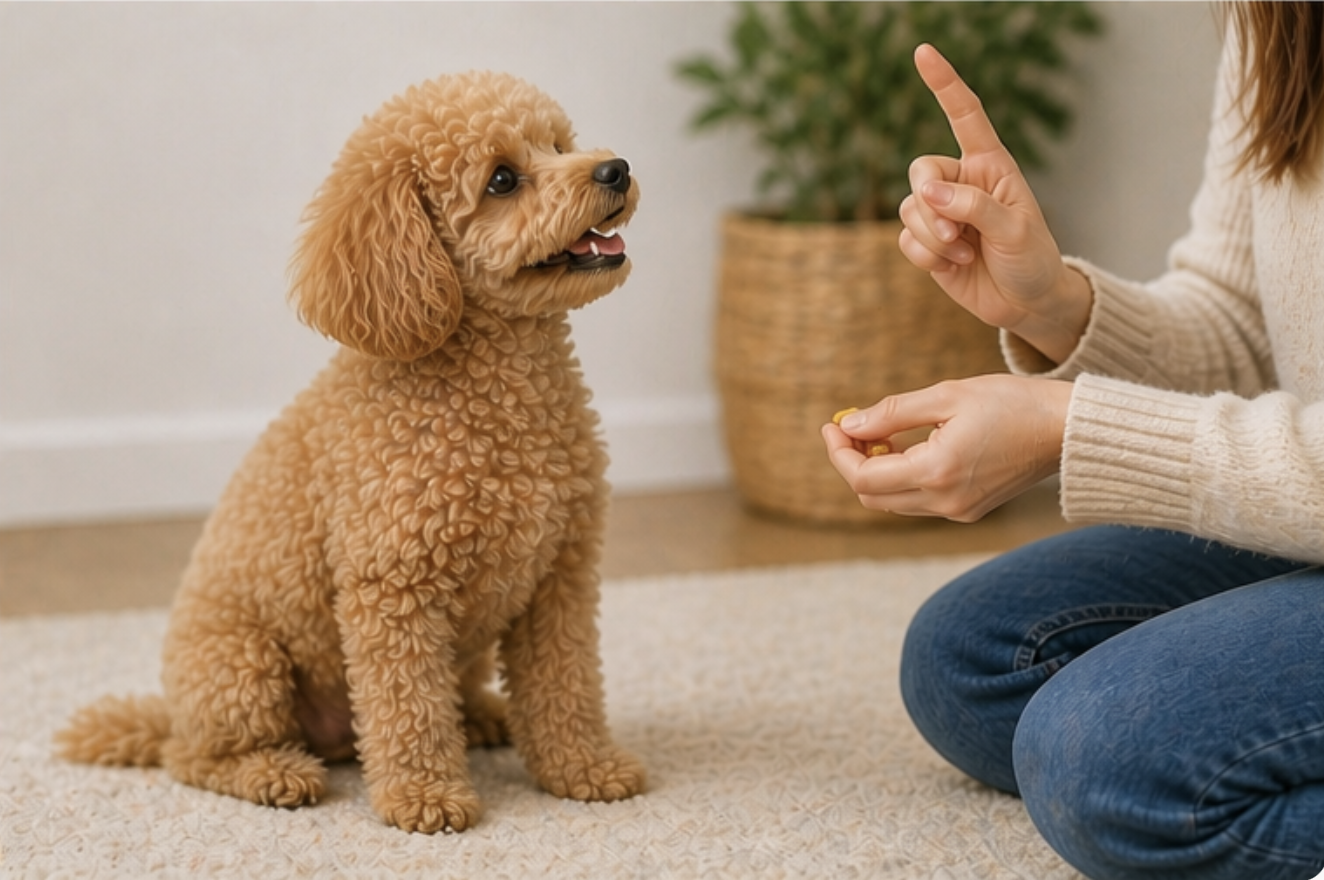
How to Train a Poodle: Smart, Sensitive & Eager to Learn
Poodles are famous for being smart, but smart does not always mean easy. A clever poodle learns quickly, notices patterns, remembers what works, and may invent their own rules if the training is unclear.
That is why poodle training works best when it is gentle, consistent, and interesting. Harsh methods can make a sensitive poodle shut down or become anxious. Clear rewards, short sessions, and calm repetition usually work much better.
This guide covers basic commands, potty training, crate training, leash manners, socialization, common mistakes, and simple ways to make training feel natural in everyday life.
Are poodles easy to train?
Poodles are usually very trainable. They are intelligent, people-focused, and often enjoy learning. Many poodles pick up new commands quickly when the lesson is clear and rewarding.
But poodles are also sensitive. If training feels confusing, too repetitive, or too forceful, they may become frustrated or avoidant. The goal is to make learning feel safe and worth repeating.
A poodle does not need heavy-handed training. They need clarity, patience, and a reason to enjoy the lesson.
What makes poodle training different?
Poodles often respond strongly to tone of voice, body language, and routine. They may notice small changes faster than you expect.
- They learn patterns quickly: good habits and bad habits can both stick.
- They can get bored: short, varied sessions work better than long drills.
- They are sensitive: calm correction works better than scolding.
- They like engagement: training can become a fun bonding activity.
Start with positive reinforcement
Positive reinforcement means rewarding the behavior you want to see again. Rewards can be treats, praise, play, toys, or access to something your poodle wants.
Food rewards are especially useful in the beginning because they are clear and fast. Later, you can mix in praise, life rewards, and play.
- Reward quickly after the behavior.
- Use small treats so your poodle does not get full too fast.
- Keep your voice warm and calm.
- End sessions before your poodle gets tired or frustrated.
Basic commands every poodle should learn
1. Name recognition
Your poodle should learn that their name means, “Look at me.” Say the name once, then reward when they look toward you.
Avoid repeating the name over and over. If you say it ten times before they respond, they may learn that listening is optional.
2. Sit
Sit is one of the easiest first commands. Hold a treat near your poodle’s nose, slowly move it upward and slightly back, and reward when their bottom touches the floor.
3. Come
Recall should feel exciting and safe. Use a happy voice, reward generously, and never call your poodle to punish them.
4. Stay
Start with one second. Reward. Then slowly build duration and distance. Stay should be taught in tiny steps, not all at once.
5. Leave it
Leave it can protect your poodle from unsafe food, dropped items, or things they should not chew. Start with easy practice at home before using it outside.
Poodle puppy training basics
Puppy training should be simple and short. Young puppies have limited attention spans, but they can learn a lot through tiny lessons repeated throughout the day.
- Use 3–5 minute sessions.
- Practice after potty breaks and naps.
- Reward calm behavior, not only commands.
- Introduce grooming handling early.
- Keep expectations age-appropriate.
A puppy does not need to master everything in one week. The first goal is trust, routine, and communication.
Potty training a poodle
Poodles can learn potty routines well, but consistency matters. Puppies need frequent breaks and clear timing.
Take your puppy out often
- After waking up
- After meals
- After play
- After naps
- Before bedtime
Reward immediately
Reward right after your puppy finishes outside. If you wait until you are back inside, the reward may not connect clearly to the potty behavior.
Clean accidents properly
Use an enzymatic cleaner. Regular cleaners may not remove the scent well enough, and leftover odor can invite repeat accidents.
Crate training a poodle
A crate can help with sleep, potty training, travel, and safe rest. But crate training should be positive and gradual.
- Let your poodle explore the crate with the door open.
- Add soft bedding if safe for your dog.
- Feed treats or meals near the crate.
- Start with short sessions.
- Never use the crate as punishment.
Some poodles settle quickly. Others need more time. Move at your dog’s pace.
Leash training for poodles
Leash training is not only about walking without pulling. It is about teaching your poodle how to stay connected with you in an exciting world.
Start indoors
Let your poodle wear the harness or collar for short periods inside. Reward calm behavior before adding outdoor distractions.
Reward check-ins
When your poodle looks back at you during a walk, reward it. This teaches them that paying attention is valuable.
Do not let pulling become the habit
If pulling always gets your poodle where they want to go, pulling becomes the strategy. Stop, pause, redirect, and reward when the leash softens.
Training toy, miniature, and standard poodles
Toy poodles
Toy poodles are small, but they still need real training. Avoid letting unwanted behavior slide just because it looks cute at first.
- Use tiny treats.
- Be careful not to overwhelm them physically.
- Teach calm handling and confidence early.
Miniature poodles
Miniature poodles often have a nice balance of energy and manageability. They usually do well with games, tricks, and daily structure.
- Keep sessions fun and varied.
- Practice leash manners early.
- Use training games to prevent boredom.
Standard poodles
Standard poodles are larger and may need more physical and mental activity. Training should include manners around people, doors, furniture, and walks.
- Teach polite greetings early.
- Reward calm behavior around guests.
- Use structured exercise and enrichment.
Socialization matters
Socialization does not mean forcing your poodle to meet every dog or person. It means helping them experience the world safely and calmly.
- Different surfaces
- Household sounds
- Car rides
- Gentle handling
- Calm people
- Safe dog exposure
- Grooming tools and sounds
Pair new experiences with treats, praise, and space. Confidence grows when your poodle feels safe.
Common poodle training mistakes
- Training too long: poodles learn better in short, focused sessions.
- Repeating commands constantly: say it once, then help your dog succeed.
- Using a harsh tone: sensitive dogs may shut down or become anxious.
- Rewarding unwanted behavior accidentally: attention can be a reward.
- Skipping mental enrichment: a bored poodle may create their own entertainment.
Simple daily poodle training routine
Morning
- Potty break
- Breakfast
- One 3-minute command session
- Short walk or play
Afternoon
- Practice leash check-ins
- Use a puzzle toy or enrichment activity
- Reward calm settling
Evening
- Short review of sit, come, or stay
- Gentle grooming handling
- Calm wind-down routine
Fun tricks for poodles
Poodles often enjoy tricks because tricks make training playful. Once your dog understands basic commands, try simple tricks.
- Shake
- Spin
- Touch
- Find it
- Go to mat
- Bring a toy
Tricks are not just cute. They build focus, confidence, and communication.
Chico’s note 🐾
A poodle learns best when training feels like a conversation, not a lecture.
Final thoughts
Training a poodle is about working with their intelligence, not against it. They are smart, sensitive, and often eager to connect with their person.
Keep lessons short. Reward the behavior you want. Stay patient when progress feels uneven. With consistency and kindness, your poodle can become a confident, well-mannered companion who enjoys learning with you.
